New book launch at MNAC – Museu do Chiado, Saturday, November 28 at 5:00 PM!
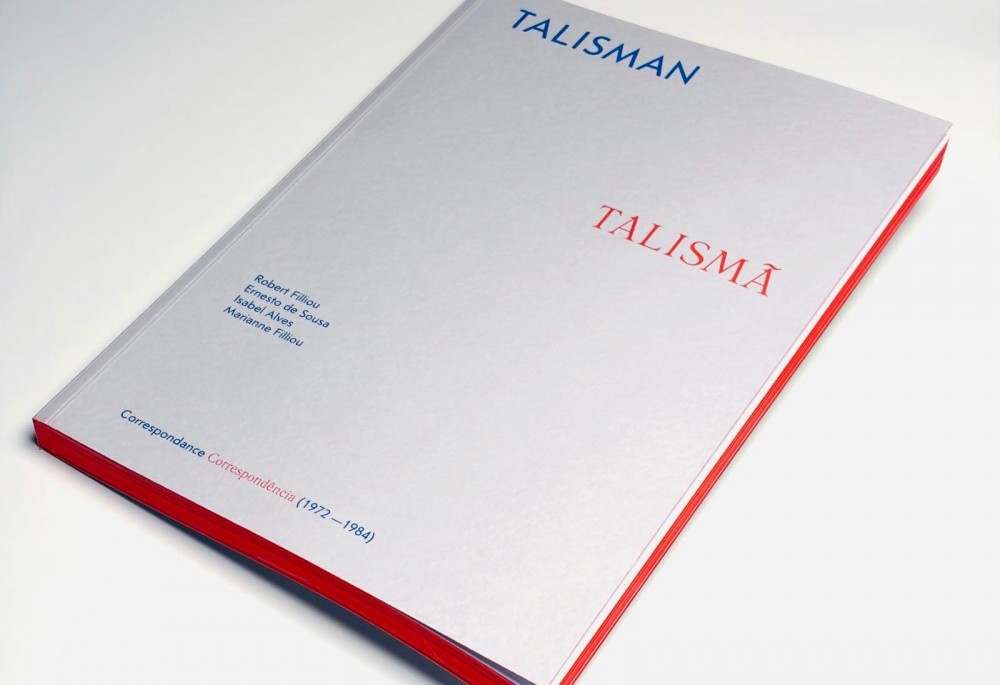
TALISMÃ TALISMAN – correspondance correspondência (1972–1984)
Ernesto de Sousa – Robert Filliou – Isabel Alves – Marianne Filliou
The artistic and theoretical work of Ernesto de Sousa holds a unique and singular place in the landscape of contemporary Portuguese art. His legacy is unanimously considered unsurpassed, particularly regarding his reflections on tradition and the avant-garde in national and international art.
In June 1973, Ernesto de Sousa and Isabel Alves visited Robert and Marianne Filliou in the south of France. This meeting marked the beginning of a close friendship, as attested by their correspondence. Ernesto de Sousa first connected with the Fluxus group in the mid-1960s, when he received Maciunas's diagram in California. In 1972, during documenta 5 in Kassel, Ernesto de Sousa discovered a major presentation of Robert Filliou's work. His visit to Robert Filliou near Nice in 1973 was decisive: Filliou gave him several documents and spoke about his Art's Birthday project, which had taken place in Aachen. They agreed to celebrate this birthday the following year in Portugal. On January 17, 1974, this event was organized by Ernesto de Sousa and CAP in Coimbra, achieving great success, as confirmed by photographs and press articles.
The reactions of both artists to the country's liberation—both fighters for freedom in their artistic projects—are reflected in their letters. Filliou writes that Art's Birthday anticipated April 25, the date of the Carnation Revolution in Portugal. This correspondence, rich in philosophical ideas, lasted 11 years, until both artists passed away in the late 1980s.
Talismã is a facsimile edition of the original letters in French between Robert and Marianne Filliou and Ernesto de Sousa and Isabel Alves, accompanied by their transcription in French and translation into Portuguese. The book includes introductory texts by Rajele Jain and João de Sousa Cardoso. It is a print run of 500 copies, published by Pierrot Le Fou and Éditions Loco (Paris). [1]
This initiative promises to revive and perpetuate the influence of these two prominent figures of avant-garde art, offering a valuable perspective on their thoughts and creative exchanges. Publishing this correspondence will deepen our understanding of their collaboration and the impact of their works within the artistic and historical context of the era.
Support:: DIREÇÃO GERAL DAS ARTES, MINISTÉRIO DA CULTURA, JUVENTUDE E DESPORTO